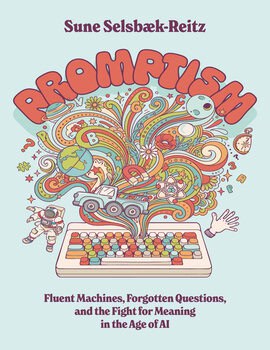
In Promptism, Sune Selsbæk-Reitz examines a growing cultural habit: our tendency to treat machine-generated language as if it were knowledge. When large language models such as ChatGPT produce confident, fluent answers, it becomes easy to mistake coherence for truth. The result is a subtle shift in how we read, think, and judge information.
Part I, The Fluency Trap, explores why AI-generated text feels trustworthy even when it is incomplete, fabricated, or detached from reality. Here the book introduces the concept of promptism — the quiet cultural tendency to accept fluent machine language as if it carried understanding behind it. Topics such as fluency bias, hallucinations, confidence without knowledge, and the disappearance of visible sources reveal how easily polished language can replace careful verification.
Part II, Thinking in an Age of Simulation, shifts focus from the systems themselves to what they do to us. The book examines how conversational AI, algorithmic feedback loops, and machine mirroring shape the way we think, speak, and even understand ourselves. Rather than simply answering questions, these systems quietly train expectations about certainty, politeness, and authority.
Part III, Toward a New Literacy, turns toward responsibility and renewal. Instead of offering shallow productivity tricks, this part argues for a deeper form of literacy suited to the age of machine language. Through ideas such as the missing author problem, traceability, and reading as resistance, readers are invited to reclaim their role in interpretation and knowledge-making.
Blending philosophy, cultural criticism, and practical insight, Promptism addresses urgent questions about AI governance, digital trust, epistemic responsibility, and the limits of machine intelligence. As generative AI moves into schools, workplaces, media, and everyday decision-making, the challenge is no longer simply getting answers faster. The challenge is learning to recognize when fluency masks uncertainty and when convenience begins to erode judgment.
For readers who want more than another book about artificial intelligence trends, Promptism offers something deeper: a thoughtful exploration of machine language, human responsibility, and the fragile boundary between persuasion and knowledge.
In a world overflowing with confident machine-made answers, Promptism is a reminder that the ability to question, interpret, and doubt remains a profoundly human skill.